
Ear conditions
Conchal crus in newborns
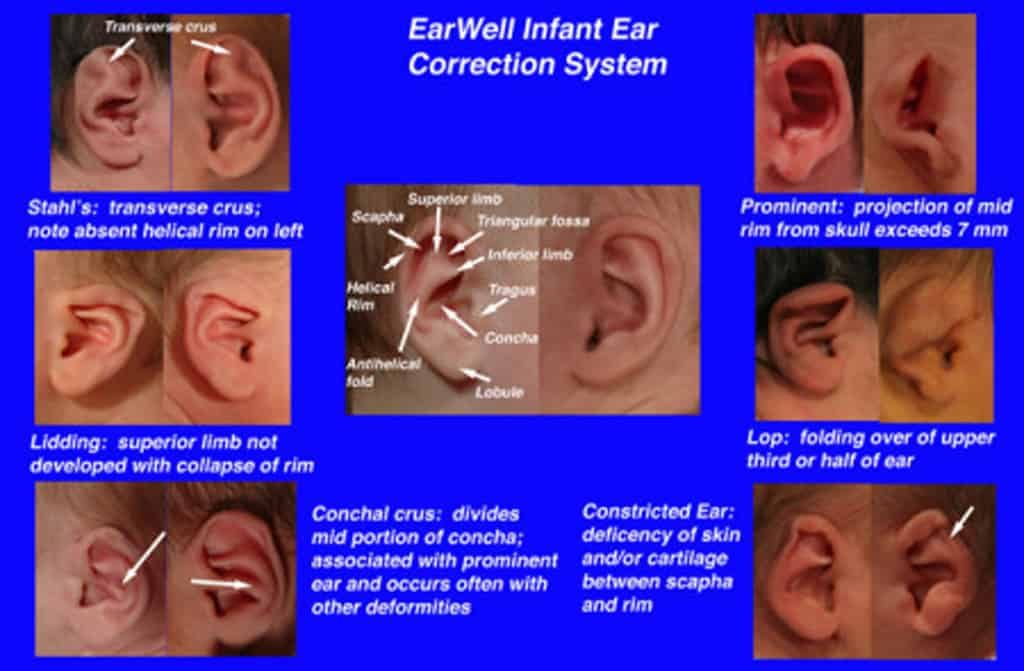
The concha is the bowl of the ear next to the ear canal. A conchal crus is an extra ridge of cartilage that crosses this bowl, usually running back from the start of the rim. It can push the ear out from the head and often appears with other shape features.
What it looks like
Instead of a smooth, open bowl, the concha is divided by a firm ridge. Because the ridge can hold the ear away from the head, a conchal crus is a common contributor to a prominent ear. It is also often seen with Stahl’s ear.

How it is assessed
The clinician examines the length and firmness of the ridge and how it affects the ear’s position, and checks for other features that may make this a mixed shape.
Is molding considered?
It may be. Molding can apply gentle pressure to flatten the ridge and support a more open bowl while the cartilage is soft. The response depends on how prominent the ridge is and your baby’s age. When to start.
Related terms
Clinicians may call this a prominent crus helicis or describe a “ridge” in the concha. It is not the same as Stahl’s ear, although the two often appear together.
Questions about conchal crus
What is a conchal crus?
It is an extra ridge of cartilage across the bowl of the ear (the concha), which can make the ear stand out.
How is it assessed?
A clinician examines the ridge and how it affects the ear’s position, and checks for other features such as Stahl’s ear or prominence.
Can molding help a conchal crus?
Molding may be considered while the cartilage is soft. The clinician will discuss realistic expectations. Candidacy.
Is a conchal crus the same as Stahl’s ear?
No. Stahl’s ear involves an extra fold in the upper ear, while a conchal crus crosses the bowl near the ear canal. The two often occur together. Stahl’s ear.
Questions about your baby’s ears?
Request an evaluation with EarWell Centers or call our team. We will help you understand the next step.