
Ear conditions
Infant ear deformities
Newborn ear shape differences are common. Most involve an ear that has all of its tissue but an unusual fold, ridge or position. These are often called deformities, and many may be suitable for nonsurgical molding. Differences where tissue is missing are called malformations and need other care.
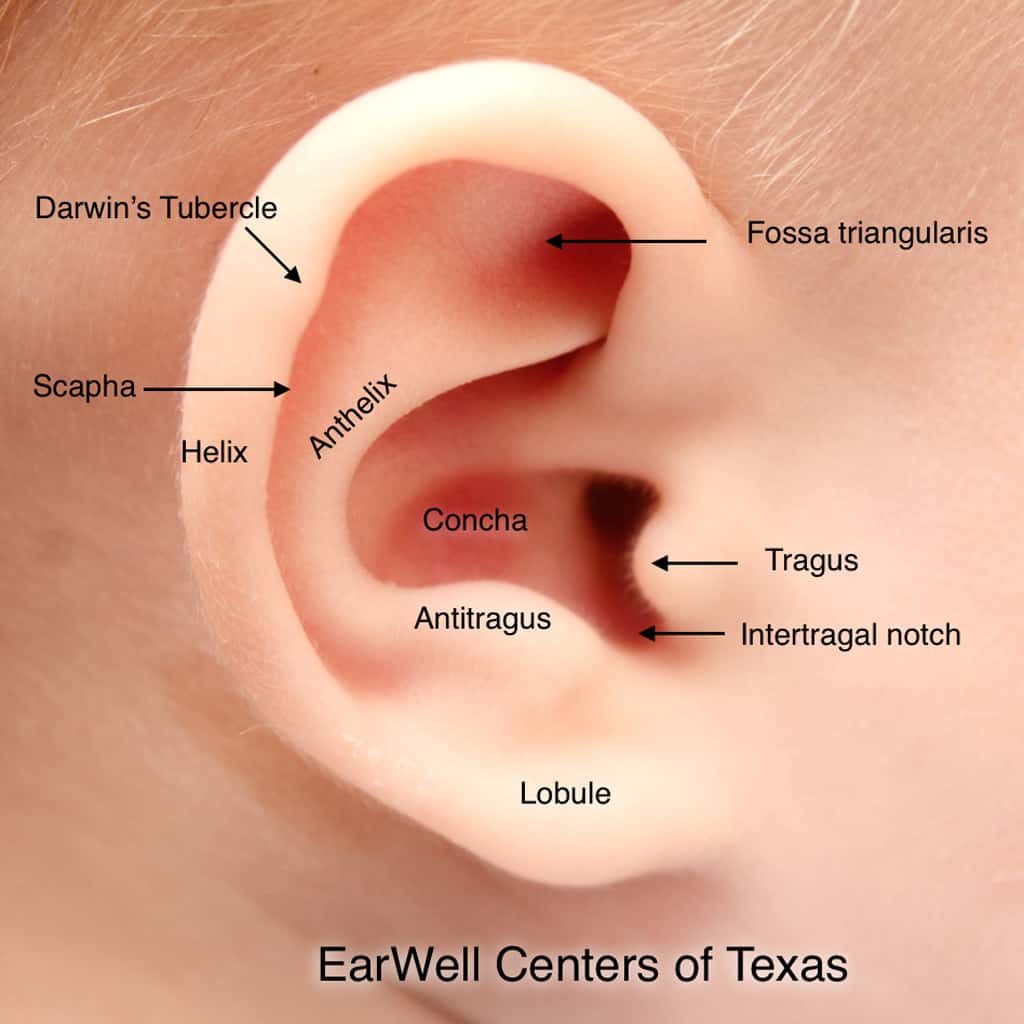
Common newborn ear shapes
Each guide explains what the shape looks like, how it is assessed and whether molding may be considered. Many babies have more than one feature.
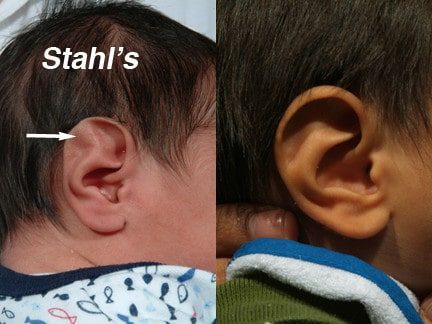
Stahl’s ear
An extra fold of cartilage that gives the upper ear a pointed shape.
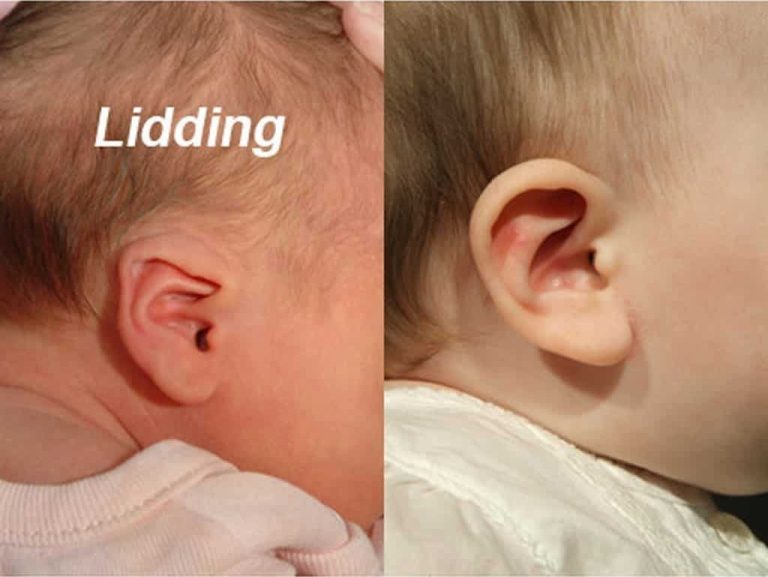
Lidding
The top of the ear folds down or forward, like a lid.
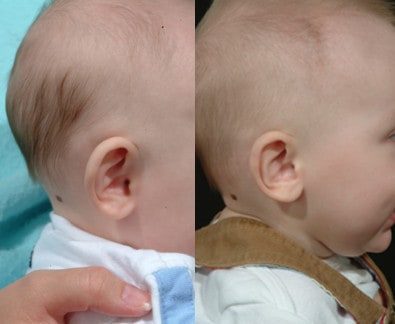
Prominent ears
Ears that stand out from the side of the head more than usual.
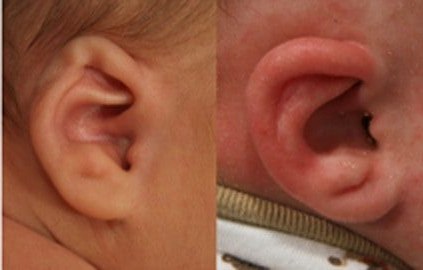
Constricted ear
A tight or cupped upper rim, including cup and lop ear shapes.
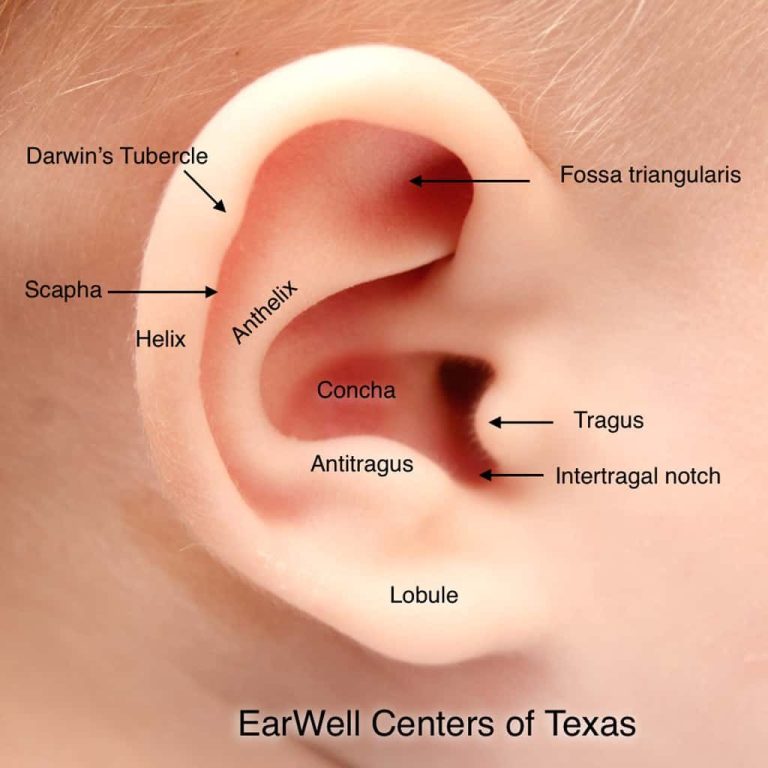
Helical rim differences
The outer rim of the ear is flat, compressed or irregular.
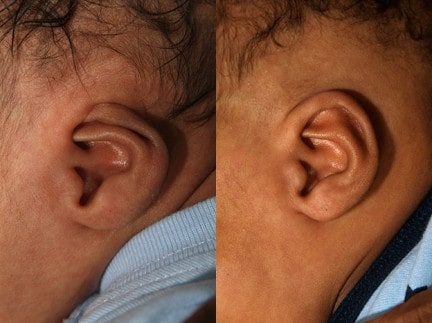
Cryptotia
The upper part of the ear is tucked under the skin of the scalp.
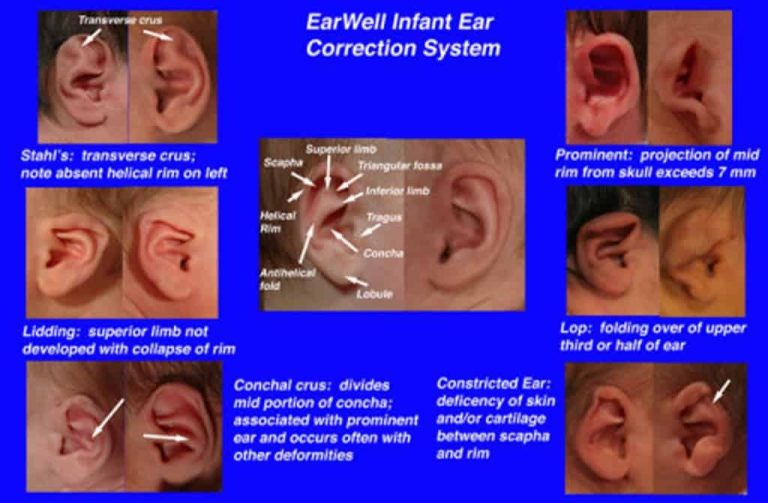
Conchal crus
An extra cartilage ridge crossing the bowl of the ear.
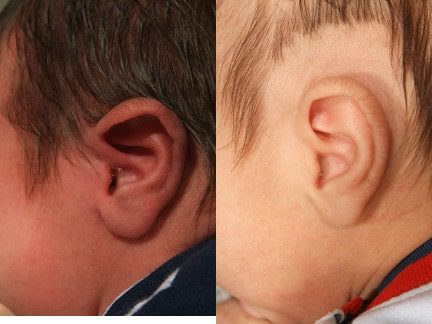
Mixed ear shapes
More than one shape feature in the same ear.
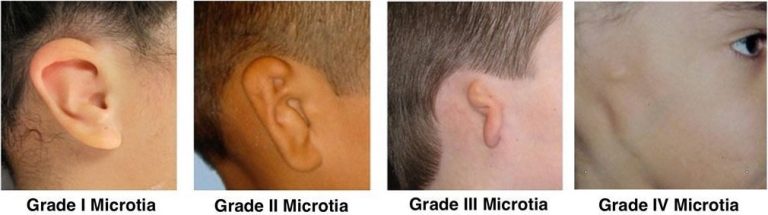
Microtia and anotia
Malformations where part or all of the outer ear did not develop.
Deformity or malformation?
- Deformity: the ear has all its skin and cartilage, but the shape is unusual, for example folded, pointed or tucked. Molding may be considered.
- Malformation: some skin or cartilage did not fully develop, as in microtia or anotia. Molding cannot create missing tissue, so families are referred for specialist care, including a hearing assessment.
What causes ear shape differences?
Ear shape can be influenced by how a baby was positioned before birth, by how the ear muscles and cartilage developed, and sometimes by family traits. In most cases there is no single known cause, and nothing parents did caused it. Some ear differences can occur with other findings, which is why your pediatrician examines your baby as a whole. Genetics and associated conditions.
Learning the parts of the ear
Terms such as helix, antihelix, concha and scapha come up in many of these guides. Our newborn ear-shape guide explains them in plain language.
Terms can overlap
Different clinicians and websites sometimes use the same word for different shapes. For example, “cup ear” and “lop ear” are often used for forms of constricted ear, while a prominent ear is a different shape. The clinician will use clear terms for your baby’s ears at the evaluation.
Questions about ear conditions
How common are newborn ear shape differences?
They are common. Studies of newborns have found that a meaningful share of babies have some ear shape difference at birth, and some of these change on their own in the first days. An exam is the best way to know about your baby.
What is the difference between a deformity and a malformation?
A deformity is an unusual shape in an ear that has all its tissue. A malformation means some tissue did not fully develop. Molding may help deformities but cannot replace missing tissue.
Which ear conditions can be treated with molding?
Many deformities may be considered, including Stahl’s ear, lidding, prominent ears, constricted ears, helical rim differences, cryptotia, conchal crus and mixed shapes. The clinician decides after an exam. Candidacy.
Did something during pregnancy cause my baby’s ear shape?
Usually there is no single cause. Position before birth and how the ear developed can play a part. It is not something parents caused.
What happens if my baby has microtia?
Molding cannot create missing tissue, so the clinician will explain next steps, including a hearing assessment and referral to specialists. Microtia and anotia.
Questions about your baby’s ears?
Request an evaluation with EarWell Centers or call our team. We will help you understand the next step.