
Candidacy
Is your baby a candidate for ear molding?
Many newborn ear shape differences may be suitable for molding, but only an examination can answer the question for your baby. This page explains what our clinicians look at, so you know what to expect.
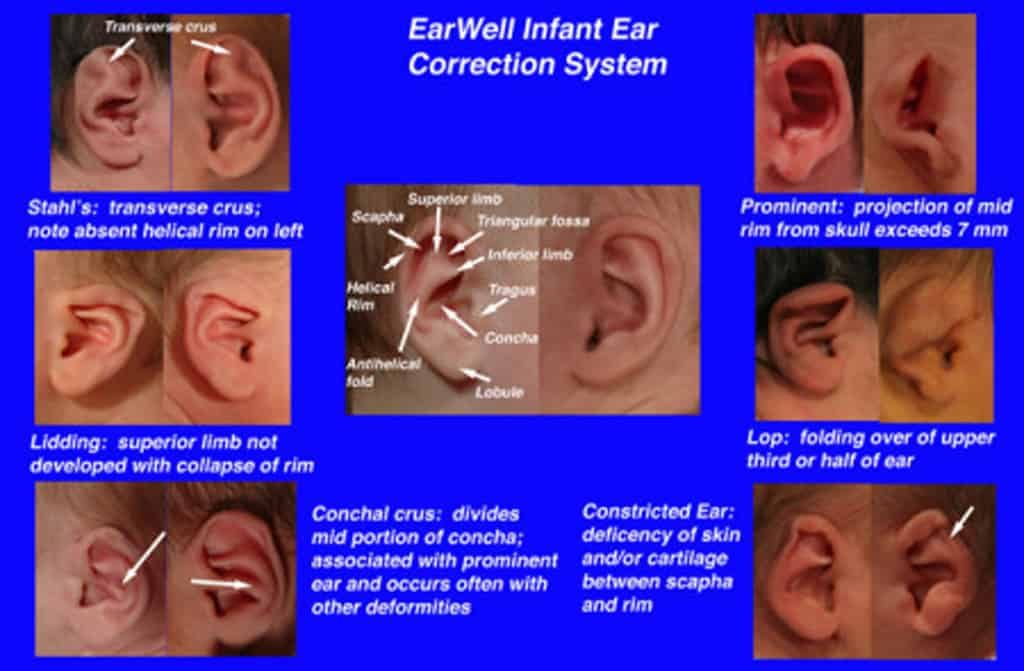
Ear shapes our clinicians assess
Molding may be considered when the outer ear has all its tissue but an unusual shape, such as:
- Stahl’s ear, with an extra fold or pointed upper edge
- Lidding, where the top of the ear folds down
- Prominent ears that stand out from the head
- Constricted ears, including cup and lop shapes
- Helical rim differences, where the outer rim is flat or irregular
- Cryptotia, where the upper ear is tucked under the scalp skin
- Conchal crus, a ridge across the bowl of the ear
- Mixed shapes that combine more than one feature
What the clinician considers
- The exact shape of each ear and how firm the cartilage feels
- Your baby’s age, including whether your baby was born early
- The skin around the ear and your baby’s general health
- Whether the shape has been changing since birth
- What you hope treatment will achieve
There is no online quiz that can decide this. We do not want you to rule out an evaluation, or count on treatment, based on photos alone.
When molding is not the right fit
Molding reshapes tissue that is present. It cannot create missing skin or cartilage, so it is not a treatment for microtia or anotia. Some shapes, or older babies with firmer cartilage, may respond less. If molding is unlikely to help, the clinician will explain why and discuss other options, which may include seeing another specialist.
Learn about specific ear shapes
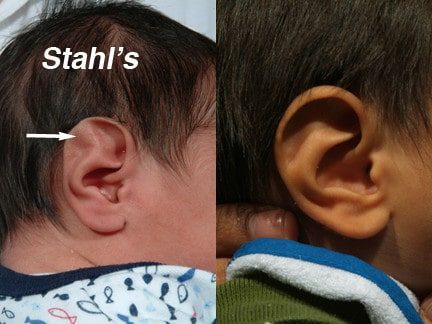
Stahl’s ear
An extra fold of cartilage that gives the upper ear a pointed shape.
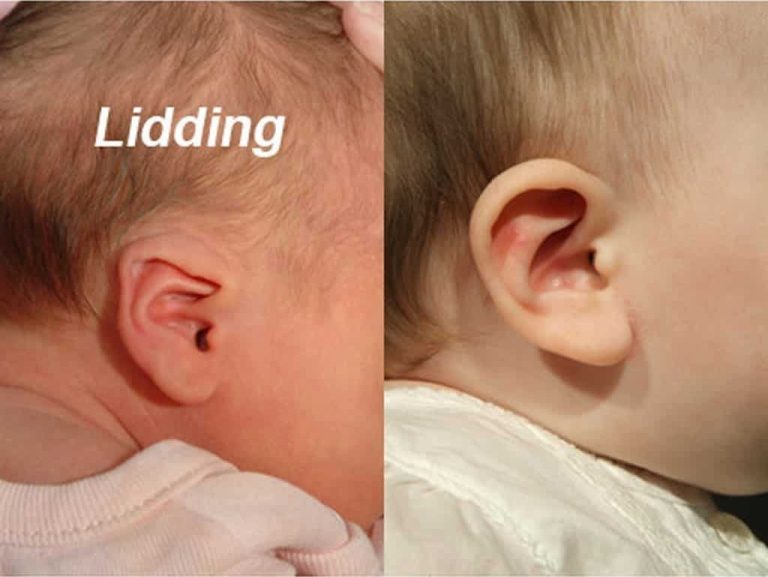
Lidding
The top of the ear folds down or forward, like a lid.
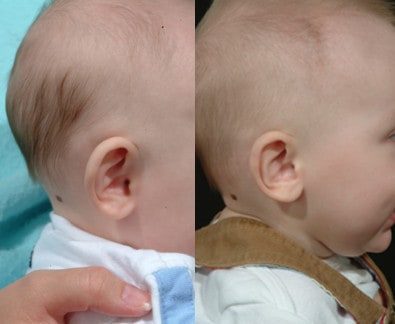
Prominent ears
Ears that stand out from the side of the head more than usual.
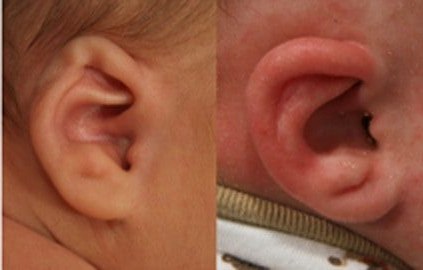
Constricted ear
A tight or cupped upper rim, including cup and lop ear shapes.
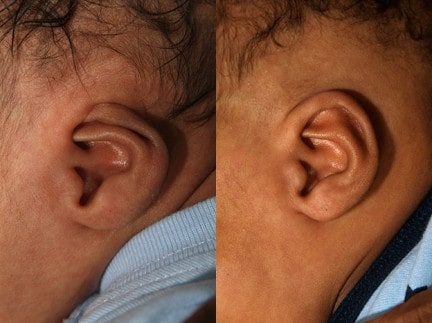
Cryptotia
The upper part of the ear is tucked under the skin of the scalp.
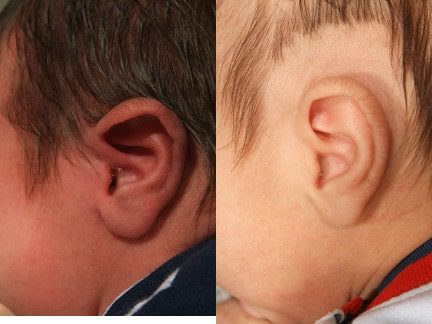
Mixed ear shapes
More than one shape feature in the same ear.
Questions about candidacy
Which ear shapes can be molded?
Many shape differences where the ear tissue is all present may be considered, including Stahl’s ear, lidding, prominent ears, constricted ears, helical rim differences, cryptotia, conchal crus and mixed shapes. The clinician decides after examining your baby.
Can just one ear be treated?
Yes. It is common for only one ear to have a shape difference. The clinician assesses each ear separately.
Can molding help if part of the ear is missing?
No. Molding reshapes existing tissue and cannot add missing skin or cartilage. Babies with microtia or anotia are referred for other specialist care. Learn about microtia.
What if my baby is not a candidate?
The clinician will explain why and talk through other options, which may include monitoring, a referral to another specialist, or a surgical opinion when your child is older.
Can I find out from photos whether my baby is a candidate?
Photos help you describe the concern, but they cannot replace an exam of the ear’s shape and cartilage. Please call 214-540-1428 for an evaluation.
Questions about your baby’s ears?
Request an evaluation with EarWell Centers or call our team. We will help you understand the next step.