
Ear conditions
Lidding ear in newborns
Lidding describes an ear where the upper rim folds down or forward over the ear, like a lid. It is one of the shapes parents most often notice, because the top of the ear looks folded.
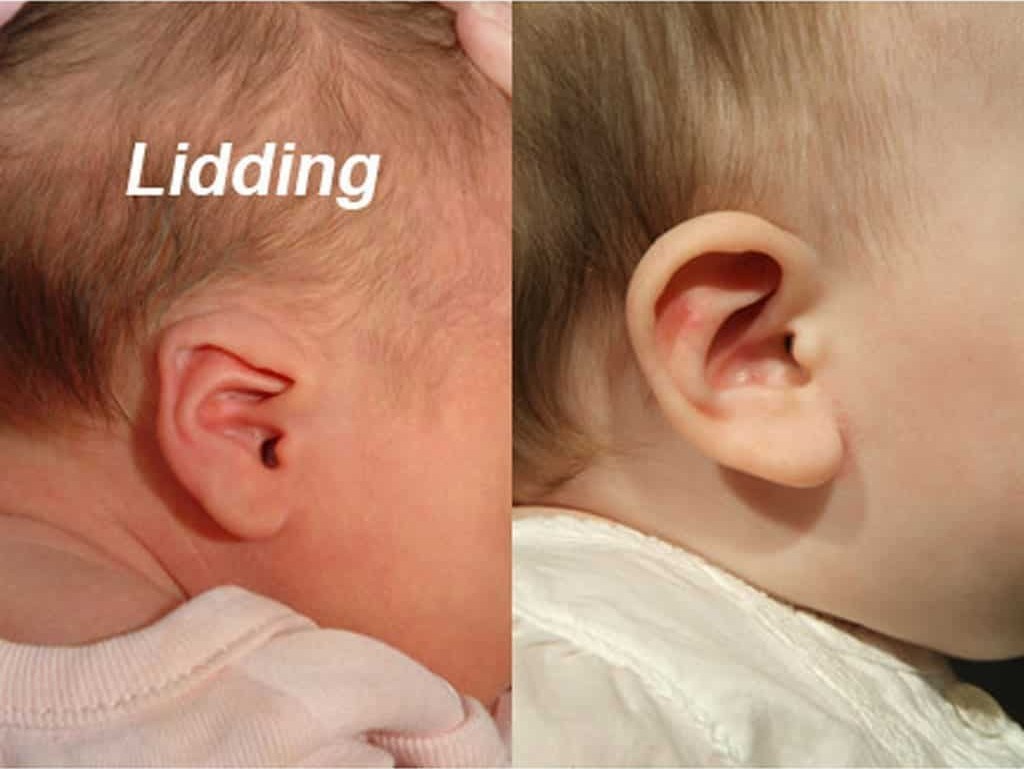
What lidding looks like
The upper part of the ear bends over instead of standing up in a smooth curve. The fold can be soft and easy to lift, or firmer. It may affect one or both ears and can occur with other features, such as a prominent ear.
How it is assessed
The clinician looks at where the fold starts, how much of the ear it covers and how easily the cartilage moves. They also check whether the rim itself is tight, which would suggest a constricted ear rather than lidding alone.
Is molding considered for lidding?
It may be. Molding supports the upper ear in a more upright position while the cartilage is soft. The clinician will explain how your baby’s ear is likely to respond based on the fold and your baby’s age. When to start.
Lidding, lop ear and folded ear
Parents often search for “folded ear.” That can mean lidding, but also other shapes. “Lop ear” usually describes a more marked fold where the top of the ear droops, which clinicians often group with constricted ears. Baby born with a folded ear.
Questions about lidding
What is lidding of the ear?
Lidding is when the upper rim of the ear folds down or forward over the ear, so the top looks folded like a lid.
How is lidding assessed?
A clinician examines how much of the ear is folded, how firm the cartilage is and whether the rim is tight, which helps distinguish lidding from a constricted ear.
Can molding correct lidding?
Molding may be considered while the cartilage is soft. The clinician will discuss what is realistic for your baby. Candidacy.
Is lidding the same as lop ear?
They are related but not identical. Lop ear usually describes a more marked fold and is often grouped with constricted ears. Constricted ear.
Will a folded ear straighten by itself?
Some soft folds improve in the first days, while others persist. An evaluation can help you decide whether to wait or start treatment. Self-correction.
Questions about your baby’s ears?
Request an evaluation with EarWell Centers or call our team. We will help you understand the next step.