
Ear conditions
Helical rim differences in newborns
The helix is the curled outer rim of the ear. In a helical rim difference, part of that rim is flattened, compressed or irregular instead of forming a smooth curl. It is often noticed together with other ear shape features.
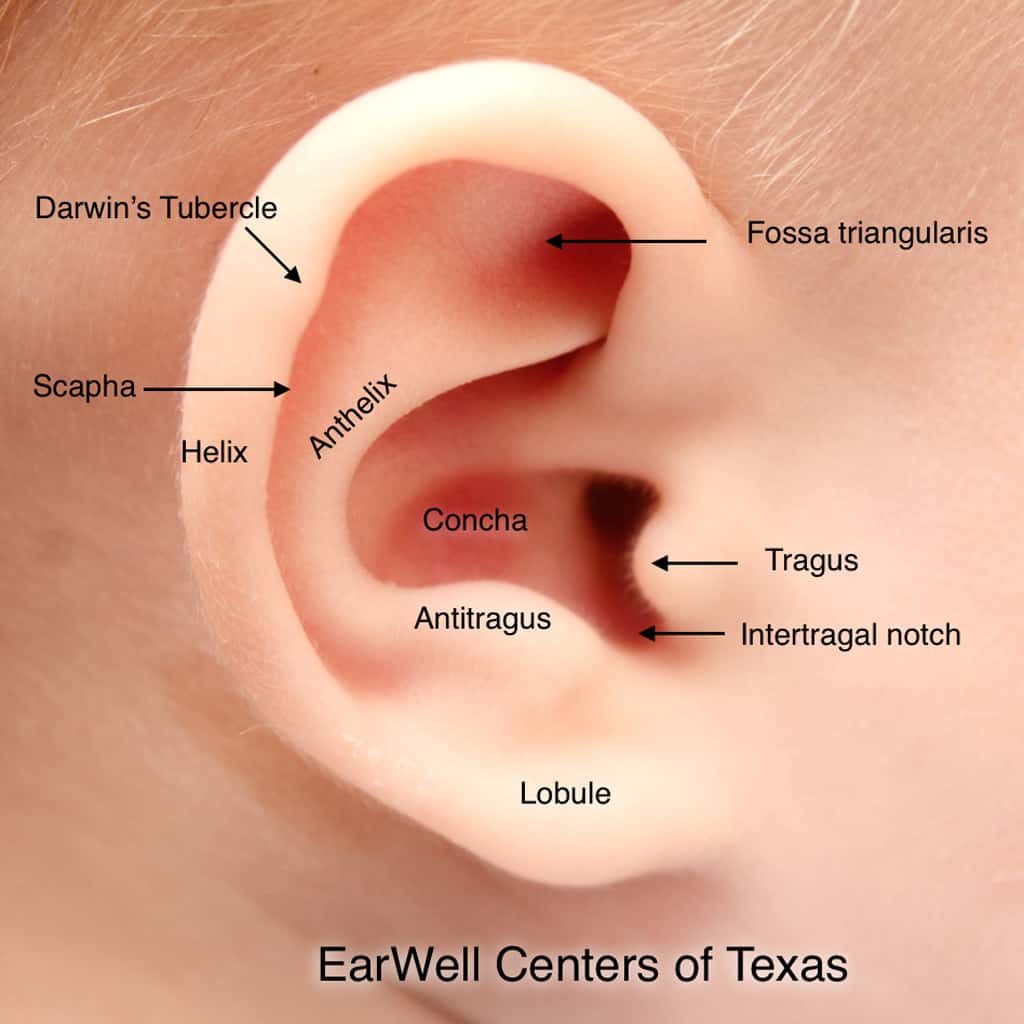
What it looks like
The edge of the ear may look flat instead of rolled, have a kink or notch, or seem pressed in along one section. Sometimes the difference is subtle and easier to see when the ears are compared side by side. Our ear-shape guide shows where the helix is.
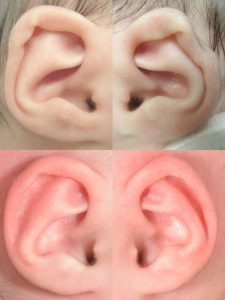
How it is assessed
The clinician examines the length and shape of the rim and checks whether the rim is also tight, which would point toward a constricted ear, or whether there is an extra fold, as in Stahl’s ear.
Is molding considered?
It may be. Molding can support a more natural curl of the rim while the cartilage is soft. How much it changes depends on the shape, the amount of tissue and your baby’s age. When to start.
Related terms
You may see “helical rim compression,” “flat helix” or “loss of the helical fold.” These describe similar findings. A rim difference is also common as part of a mixed shape.
Questions about helical rim differences
What is a helical rim deformity?
It is when the curled outer rim of the ear (the helix) is flattened, compressed or irregular instead of smoothly rolled.
How is it assessed?
A clinician examines the rim’s shape and length and checks for related features such as tightness or an extra fold.
Can molding help the rim?
Molding may be considered while the cartilage is soft. The clinician will explain what is likely for your baby. Candidacy.
Is a helical rim difference the same as a constricted ear?
Not always. A constricted ear has a tight rim that draws the top of the ear in. A helical rim difference can occur without that tightness. Constricted ear.
Questions about your baby’s ears?
Request an evaluation with EarWell Centers or call our team. We will help you understand the next step.