
Ear conditions
Microtia and anotia
Microtia means the outer ear is smaller and less developed than usual. Anotia means the outer ear did not develop. These are malformations, where some tissue is missing, rather than shape differences, and they are cared for differently from the ear shapes that molding treats.
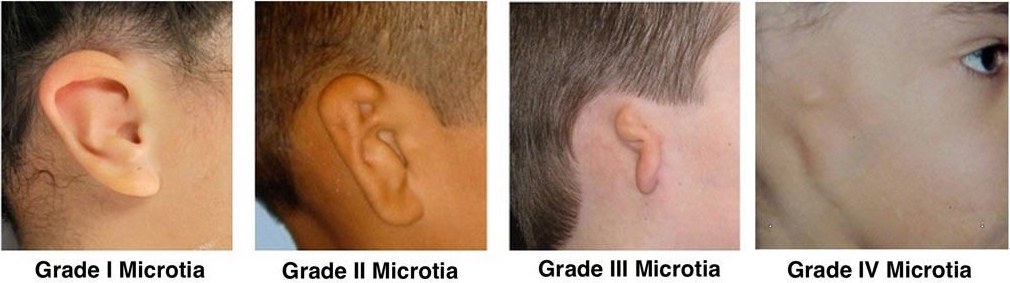
What microtia looks like
Microtia ranges from mild to complete. In milder forms the ear has most of its structures but is smaller or partly formed. In more marked forms there may be only a small piece of tissue, often near the earlobe. The ear canal may be narrow or absent. Microtia usually affects one ear but can affect both.
Why molding cannot replace missing tissue
Ear molding reshapes tissue that is already there. It cannot create skin or cartilage that did not develop. If your baby has microtia, our clinicians can talk through what that means, but molding is not a treatment for the missing tissue itself.
Hearing comes first
When the ear canal is narrow or closed, hearing on that side may be affected. Your baby’s newborn hearing screen and follow-up with an audiologist are important, and your pediatrician will guide this. Hearing and ear development.
Specialists who may help
Families with microtia often work with a team that may include:
- A pediatric audiologist, for hearing tests and hearing support
- A pediatric ear, nose and throat specialist (otolaryngologist)
- A craniofacial or pediatric plastic surgery team, to discuss ear reconstruction options when your child is older
- A genetics clinic, if your pediatrician suggests checking for associated findings (genetics)
Support for your family
Learning that your baby has microtia can bring many questions. Take one step at a time, starting with hearing. Supporting your child has ideas for talking about differences as your child grows.
Questions about microtia and anotia
What is the difference between microtia and anotia?
Microtia means the outer ear is small and not fully developed. Anotia means the outer ear did not develop.
Can ear molding treat microtia?
No. Molding can only reshape existing tissue and cannot create missing skin or cartilage. Our team can talk with you about next steps and other specialists.
Does microtia affect hearing?
It can, especially if the ear canal is narrow or closed. Your baby should have hearing screening and follow-up with an audiologist as your pediatrician advises.
Which specialists treat microtia?
Families often see a pediatric audiologist, a pediatric ear, nose and throat specialist and a craniofacial or plastic surgery team. Your pediatrician can coordinate referrals.
Is microtia linked to other conditions?
Sometimes microtia occurs with other findings, and sometimes on its own. Your pediatrician may suggest further checks. Genetics and associated conditions.
Questions about your baby’s ear?
Our team can help you understand the difference between shape differences and malformations, and where to turn next.