
Ear conditions
Mixed ear shape differences in newborns
Many newborn ears have more than one shape feature at once, for example a Stahl’s fold together with a prominent angle, or lidding with a conchal crus. Clinicians call this a mixed deformity.
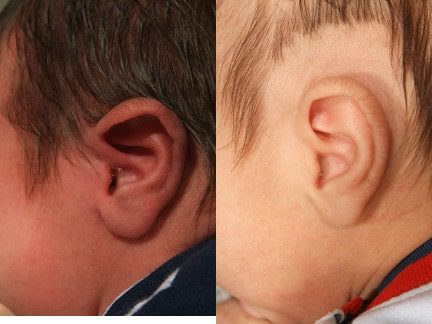
What a mixed shape looks like
Each feature may be mild, but together they change the ear’s overall look. One ear may show several features while the other has one, or none. Common combinations include Stahl’s ear with prominence, conchal crus with prominence, and lidding with a helical rim difference.
How it is assessed
The clinician identifies each feature, how firm the cartilage is and how the features affect one another. This helps decide whether molding is likely to help and how the device should be fitted.
Is molding considered for mixed shapes?
It may be. The device can be fitted to address several features at once. Mixed shapes can need careful adjustment over the course of treatment, and the clinician will explain the expected response for your baby. Treatment timeline.
Questions about mixed shapes
What is a mixed ear deformity?
It is an ear with more than one shape feature, such as a Stahl’s fold together with prominence.
How is a mixed shape assessed?
A clinician identifies each feature and how they affect one another, then explains whether molding may help.
Can molding treat several features at once?
Often the device can be fitted to address more than one feature. The clinician will tell you what is realistic. Candidacy.
Does a mixed shape take longer to treat?
It can, because several features may need adjustment. The clinician will estimate the timeline for your baby.
Questions about your baby’s ears?
Request an evaluation with EarWell Centers or call our team. We will help you understand the next step.